
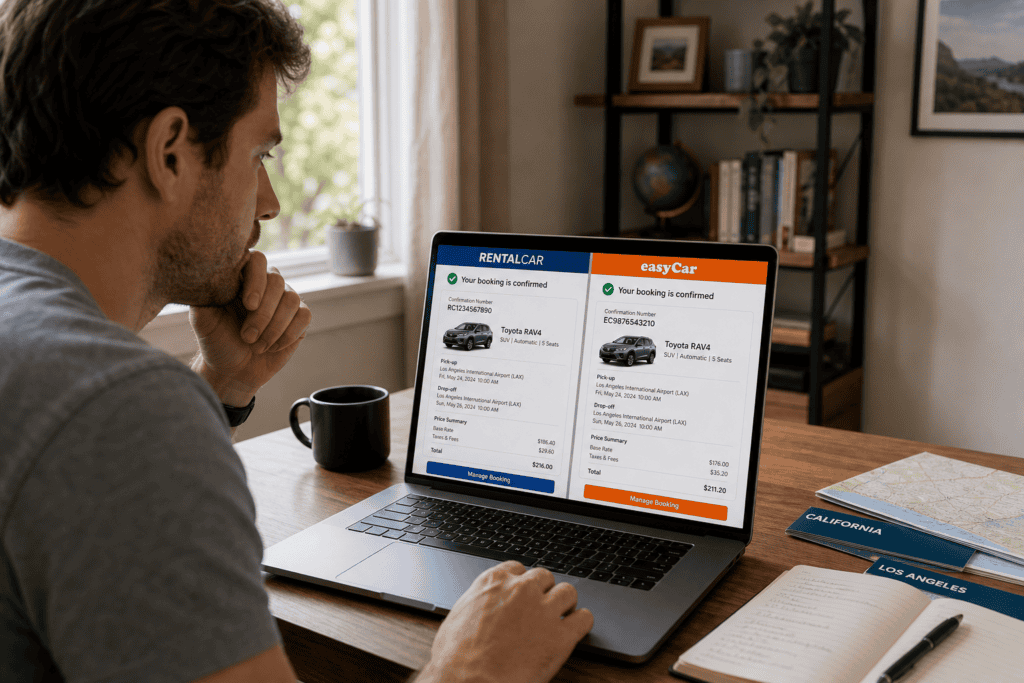
You booked a rental car weeks ago, and now you’ve spotted a lower price for what looks like the same reservation. Should you cancel and rebook? The answer depends on your cancellation terms, whether the new offer truly matches your original reservation, and whether you secure the replacement before giving up the one you already have. This article explains when rebooking a car rental for a lower price is worth pursuing and how to do it without risking your ability to pick up a vehicle at all.
Quick Answer
Rebooking can make sense when your current reservation is fully cancelable, the new price is for an equivalent vehicle class, location, and dates, and you’ve confirmed the replacement reservation before canceling the original. It rarely makes sense for prepaid or nonrefundable rates, or when the “lower” price actually reflects different terms, fees, or mileage limits.
Why Rebooking Opportunities Come Up
Rental pricing can shift after you book because of changing demand, updated fleet availability, new promotions, or adjustments in dynamic pricing systems. A rate you locked in three weeks ago isn’t fixed in the marketplace — other travelers are searching the same dates, and the price they see may be higher or lower than what you paid.
This is one reason flexible, cancelable reservations are often worth choosing in the first place. A refundable booking lets you hold a vehicle while still watching for a better rate. For a deeper look at how prepaid and pay-later rates compare, see should you prepay for a rental car.
The First Question: Is Your Reservation Actually Flexible?
Before comparing any new price, check the terms of your existing reservation. Some pay-later reservations can be canceled without penalty up to a certain point before pickup. Others carry restrictions, and prepaid rates are frequently nonrefundable or only partially refundable.
Rebooking a nonrefundable reservation to chase a lower price can leave you paying for two rentals — the original charge plus the new one. Always confirm cancellation rules directly through your confirmation email or the booking platform before assuming a switch is free.
Is the New Price Actually Comparable?
A lower displayed number doesn’t always mean a better deal. Before rebooking, verify that the new offer matches your original reservation on every relevant point:
- Same pickup and return location
- Same pickup and return date and time
- Same vehicle category
- Same driver age requirements
- Same mileage allowance
- Same fuel policy
- Same cancellation and payment terms
- Same mandatory taxes and location or airport charges
A cheaper-looking rate for a smaller vehicle class, a different pickup counter, or a nonrefundable rate isn’t a true apples-to-apples comparison. For a full walkthrough of how to check this properly, see how to compare car rental prices the smart way.
The Safe Order of Operations for Rebooking
The most important rule in this entire process: never cancel your existing reservation before your replacement is confirmed. Follow this sequence instead:
- Find the lower-priced offer and confirm it’s genuinely available for your dates.
- Verify the vehicle class, location, and rental terms match your current booking.
- Check the total price, not just the daily base rate, including taxes and mandatory fees.
- Review the new reservation’s cancellation and payment conditions.
- Complete and confirm the new reservation.
- Only after receiving confirmation, cancel the original reservation if your terms allow it.
This order protects you from a gap where you’ve canceled your only booking but haven’t yet locked in the replacement.
Hypothetical Example: Comparing Before You Switch
Consider a hypothetical traveler who books a refundable midsize sedan for $310 for a five-day trip. Two weeks later, they notice an ad showing $275 for what appears to be the same dates and location. Before switching, they check the details and discover the new rate is for a compact car with a lower mileage cap and a nonrefundable payment requirement.
Once they filter the search to match their original midsize category with the same refundable terms, the comparable rate turns out to be $298 — still a savings, but smaller than the initial headline number suggested. This kind of check is why side-by-side comparison matters more than the sticker price alone.
When Rebooking Usually Makes Sense
- Your current reservation is fully refundable or cancelable without penalty.
- The new price is verified for an identical vehicle class, location, and rental window.
- The new reservation’s cancellation terms are at least as flexible as your original.
- You’ve confirmed the new booking before canceling the old one.
- The total cost, including taxes and fees, is genuinely lower.
When Rebooking Is Riskier or Not Worth It
- Your existing reservation is prepaid and nonrefundable.
- The price difference is small once fees and terms are equalized.
- Your travel dates fall during high-demand periods, such as a holiday car rental window, where reversing a booking could risk losing your vehicle category entirely.
- The new offer is from an unfamiliar source and its terms haven’t been fully verified.
- You’d need to give up loyalty benefits, upgrades, or other included perks tied to your original booking.
Rebooking Decision Table
| Situation | Rebooking May Make Sense | Rebooking May Be Riskier |
|---|---|---|
| Fully refundable reservation, verified lower rate | Yes, once replacement is confirmed | Low risk if terms match |
| Prepaid, nonrefundable reservation | Rarely worthwhile | May result in paying twice |
| High-demand holiday or event dates | Only if availability is confirmed first | Canceling early could cost you the vehicle category |
| Price difference is small after fees are matched | May not be worth the effort | Savings may not offset hassle |
| Specialty vehicle or minivan with limited fleet | Confirm replacement availability carefully | Inventory may not reappear if you cancel too soon |
This table is a general guide, not a guarantee — always verify current terms and availability directly before acting.
How Monitoring Fits Into the Rebooking Decision
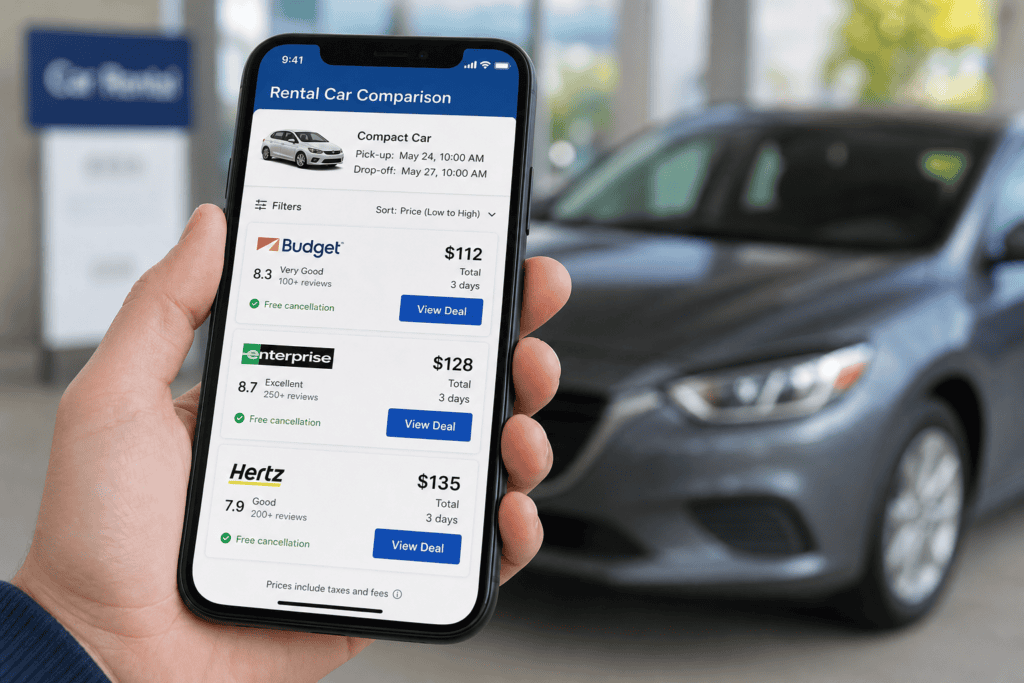
Rebooking only becomes possible if you’re actively watching for price changes after your initial reservation. Manually rechecking the same dates, location, and vehicle class periodically — or using price-alert tools where available — helps you catch a legitimate drop early enough to act on it. For a full workflow on setting this up, see how to track car rental price drops.
If you’re still deciding whether to book now or wait entirely, that’s a related but separate decision covered in should you book a rental car early or wait.
Airport Pickup Considerations
If your reservation involves an airport car rental, keep in mind that airport counters can have different inventory levels and demand patterns than off-airport locations. A lower rate advertised for a different pickup point — even in the same city — isn’t a true match. Confirm the replacement reservation uses the same specific location before treating it as comparable.
Before You Rebook
- Confirm your current reservation’s cancellation policy in writing.
- Verify the new rate matches your vehicle category exactly.
- Check that pickup and return locations, dates, and times align.
- Compare total price, including taxes and mandatory fees, not just the base rate.
- Review whether the new reservation is refundable or restrictive.
- Confirm the replacement booking is fully secured before canceling anything.
- Save confirmation numbers and screenshots of both reservations until the switch is complete.

Frequently Asked Questions
Can I always cancel a rental car reservation for free?
Not always. Many pay-later reservations allow free cancellation up to a certain point before pickup, but prepaid rates are often nonrefundable or only partially refundable. Always check your specific confirmation terms.
How much of a price difference is worth rebooking for?
There’s no fixed threshold. Weigh the verified savings against any effort, risk, or loss of benefits involved. A small difference after matching fees and terms may not be worth the hassle, while a larger, well-verified gap more clearly justifies the switch.
What if the lower price disappears before I finish rebooking?
This is a real risk, especially during high-demand periods. It’s part of why confirming the new reservation before canceling the old one is essential — if the lower rate vanishes, you still have your original booking intact.
Does rebooking affect my loyalty status or included perks?
It can. Some loyalty benefits, prepaid upgrades, or included extras are tied to a specific reservation and may not transfer automatically to a new one. Check before switching.
Is rebooking the same as tracking price drops?
No. Tracking is the ongoing process of watching for a lower rate. Rebooking is the action you take once you find one and confirm it’s a genuine, comparable improvement.
Making a Confident Rebooking Decision
Rebooking a car rental for a lower price can be a smart move, but only when your current reservation is genuinely flexible, the new offer matches on every meaningful term, and you secure the replacement before letting go of your original booking. Skipping any of these steps can turn a savings opportunity into an availability problem. For the bigger picture on car rental booking timing, explore the full pillar guide, and pair it with a consistent price-tracking habit so you’re ready to act when a real opportunity appears.
Ready to Compare Airfares?
Compare current prices and availability before you book—fares can change quickly.
Search Flight Deals →